

How to Capture Stunning Sunset Photos at Watu Karung - Watu Karung, with its dramatic cliffs and pristine beaches, offers an unparalleled canvas for capturing breathtaking sunsets. The interplay of light and shadow, the vibrant hues painting the sky, and the unique geological formations create a scene that is both awe-inspiring and photogenic. This guide will equip you with the knowledge and techniques to capture the magic of Watu Karung sunsets, transforming your photos from snapshots to masterpieces.
From planning your shoot to mastering camera settings and composition, we'll delve into the intricacies of sunset photography at this iconic location. Whether you're a seasoned photographer or a curious beginner, this comprehensive guide will empower you to capture the beauty of Watu Karung's sunsets in all their glory.
Introduction
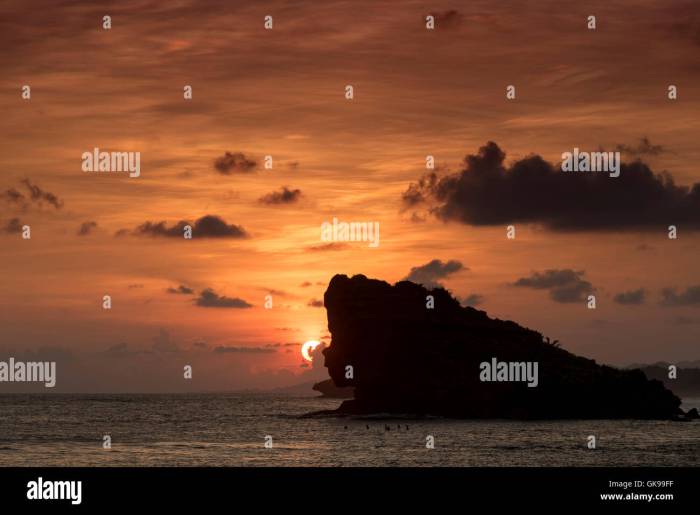 Watu Karung, located on the southern coast of Java, Indonesia, is a breathtaking location renowned for its captivating sunsets. The rugged coastline, dramatic cliffs, and pristine beaches create a picturesque backdrop for witnessing the golden hour transform the sky into a canvas of vibrant hues. The unique geological formations of Watu Karung, shaped by centuries of erosion and volcanic activity, add an element of intrigue and grandeur to the landscape.
The combination of these factors makes Watu Karung an ideal spot for capturing stunning sunset photos. The dramatic cliffs provide natural framing for the setting sun, while the sandy beaches offer a variety of vantage points to capture the diverse colors and textures of the sky. The unique rock formations, known as "Watu Karung" (meaning "Stone Bags" in Javanese), add an element of visual interest and texture to the photographs.
Geological Features of Watu Karung
Watu Karung is characterized by its distinctive rock formations, which are a result of the region's geological history. The cliffs are composed of volcanic rock, which has been eroded by the waves and wind over centuries. The erosion process has created unique shapes and textures, including caves, arches, and stacks. These formations add a sense of drama and intrigue to the landscape, making Watu Karung a visually captivating location.Planning Your Sunset Shoot: How To Capture Stunning Sunset Photos At Watu Karung
Planning is key to capturing the most breathtaking sunset photos at Watu Karung. Understanding the ideal time of year, weather conditions, and strategic positioning will ensure you're ready to capture the golden hour's magic.Timing is Everything
The best time of year to photograph sunsets at Watu Karung is during the dry season, which runs from May to September. During this period, the skies are typically clear, offering unobstructed views of the sun setting over the Indian Ocean. The dry season also provides ideal lighting conditions, with less humidity and cloud cover, enhancing the vibrancy of the sunset colors. To capture the most vibrant sunset colors, it's crucial to arrive at your chosen location about an hour before sunset. This allows you to set up your camera and experiment with different compositions as the sky begins to transform.Weather Forecast and Cloud Conditions
Checking the weather forecast is essential, especially for sunset photography. Aim for clear skies with minimal cloud cover. However, a few strategically placed clouds can add depth and drama to your photos. Here are some tips for checking weather forecasts and cloud conditions:- Use reliable weather apps like AccuWeather or Weather Underground. These apps provide detailed information on cloud cover, wind speed, and precipitation, which can impact your sunset shoot.
- Explore websites like Windy.com or Meteoblue. These sites offer advanced weather data, including cloud movement patterns, which can help you predict where the clouds will be during sunset.
Optimal Sunset Framing Locations
Watu Karung offers a variety of vantage points for capturing stunning sunsets. Here are a few recommended locations for optimal framing:- The Clifftop Viewpoint: This location offers panoramic views of the Indian Ocean and the surrounding coastline. It's ideal for capturing the sun sinking below the horizon, with the vast ocean as your backdrop.
- The Beach: The beach provides a more intimate perspective, allowing you to capture the sunset reflected on the water's surface. Look for interesting foreground elements like rocks, driftwood, or even footprints to add depth and interest to your composition.
- The Watu Karung Rock Formation: This iconic rock formation is a popular subject for sunset photography. Position yourself strategically to capture the sun setting behind the rocks, creating a dramatic silhouette.
"Remember, the key to capturing stunning sunset photos is to be prepared, patient, and creative."
Camera Gear and Settings
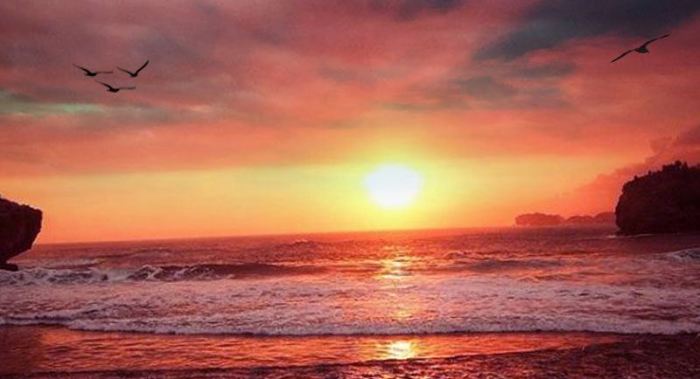 Capturing breathtaking sunset photos at Watu Karung requires the right camera gear and settings to ensure you capture the vibrant colors and dramatic light. Here's a breakdown of the essential equipment and settings to achieve stunning results.
Essential Camera Equipment
A good camera is essential for capturing stunning sunset photos.- DSLR or Mirrorless Camera: A DSLR or mirrorless camera with manual controls is ideal for sunset photography. This allows you to adjust settings like aperture, shutter speed, and ISO to achieve the desired exposure and depth of field.
- Wide-Angle Lens: A wide-angle lens (16-35mm or similar) is perfect for capturing the expansive views of the sky and the surrounding landscape. It allows you to include the dramatic clouds and the vast ocean in your compositions.
- Telephoto Lens: A telephoto lens (70-200mm or similar) can be helpful for isolating specific elements in the scene, such as a lone palm tree silhouetted against the sunset or a distant fishing boat. It allows you to compress the perspective and create a more intimate feel.
- Tripod: A sturdy tripod is crucial for sunset photography, especially as the light levels decrease. It helps to stabilize your camera, preventing blurry photos caused by camera shake, and allows you to use slower shutter speeds for longer exposures.
- Remote Shutter Release: A remote shutter release eliminates camera shake caused by pressing the shutter button, ensuring sharper images. It's especially useful when shooting long exposures or using slower shutter speeds.
- Neutral Density (ND) Filters: ND filters reduce the amount of light entering the lens, allowing you to use slower shutter speeds in bright conditions. This is helpful for creating smooth, silky water effects or capturing the movement of clouds.
Camera Settings
Proper camera settings are crucial for capturing the beauty of a sunset.- ISO: Start with a low ISO (100-400) to minimize noise in your photos. As the light levels decrease, you may need to increase the ISO slightly, but try to keep it as low as possible to maintain image quality.
- Aperture: Use a wide aperture (f/2.8-f/5.6) to create a shallow depth of field, blurring the background and highlighting the subject. This can be effective for isolating the sun or a particular element in the scene.
- Shutter Speed: The shutter speed will depend on the light levels and the desired effect. For sharp images, use a shutter speed that is fast enough to freeze any movement. If you want to capture the movement of clouds or water, use a slower shutter speed.
- Exposure Compensation: Sunset scenes can be tricky to expose correctly. The sun's brightness can trick the camera's meter, resulting in underexposed images. Use exposure compensation to adjust the exposure and ensure the sunset is properly exposed. Start by increasing the exposure by +1 or +2 stops, and adjust as needed based on the scene.
Composition and Framing
A captivating sunset photograph at Watu Karung goes beyond capturing the vibrant colors of the sky. It's about creating a compelling composition that draws the viewer's eye and tells a story. This section will delve into the art of composition and framing, equipping you with techniques to elevate your sunset photography.The Rule of Thirds and Leading Lines
The rule of thirds is a fundamental principle in photography. Imagine dividing your frame into nine equal squares using two horizontal and two vertical lines. Placing key elements along these lines or at their intersections creates a more balanced and visually appealing composition. This technique helps to create a sense of depth and visual interest. Leading lines, on the other hand, are elements in the scene that draw the viewer's eye towards the subject. This could be a path, a fence, a row of trees, or even the waves crashing on the shore. Using leading lines effectively guides the viewer's gaze and adds depth to your image.Using Foreground Elements
Incorporating foreground elements adds depth and context to your sunset photograph. This could be anything from rocks and cliffs to palm trees and boats. By placing these elements in the foreground, you create a sense of scale and distance, making the sunset appear even more dramatic.Framing Techniques
Framing techniques involve using natural elements in the scene to create a frame around your subject. This can be achieved by using trees, rocks, or even the arch of a bridge. Framing your sunset with these elements adds a sense of depth and draws the viewer's eye to the focal point. Silhouettes are another powerful framing technique. By placing a subject in front of the setting sun, you create a dark Artikel against the bright sky. This technique can create a dramatic and mysterious mood. Reflections can also be used to create captivating compositions. The reflection of the sunset in the water, for instance, adds another dimension to your photograph and creates a sense of symmetry.Balancing the Sky and Landscape
When photographing sunsets, it's essential to find a balance between the sky and the landscape. While the vibrant colors of the sky are captivating, don't neglect the beauty of the foreground. Aim for a composition that incorporates both elements harmoniously. This might involve adjusting your position or using a wide-angle lens to capture both the expansive sky and the details of the landscape.Capturing the Moment
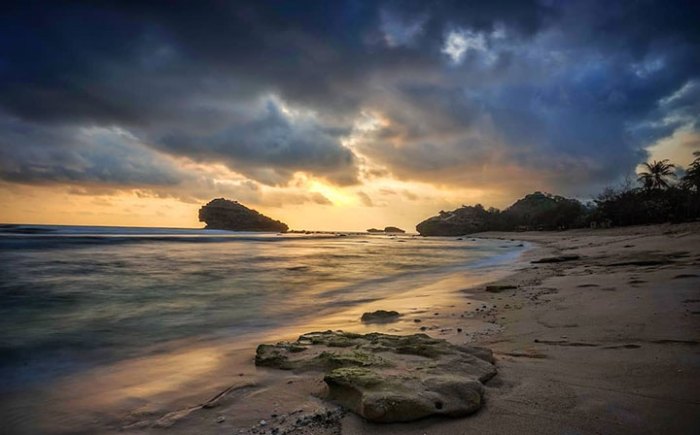 The magic of a Watu Karung sunset lies in its fleeting beauty, and capturing it requires a keen eye for light and timing. The golden hour, the period shortly after sunrise or before sunset, offers the most dramatic and captivating light. This is when the sun is low on the horizon, casting long shadows and warm, golden hues across the landscape.
Anticipating the Best Light
The key to capturing stunning sunset photos at Watu Karung is understanding the changing light conditions. The golden hour is typically about 30-45 minutes before and after sunset, but it can vary depending on the time of year and weather conditions. Using a sunrise and sunset calculator or a photography app can help you determine the exact time of the golden hour for your chosen date.Capturing the Changing Colors of the Sky
The sky transforms into a canvas of vibrant colors during sunset, from fiery oranges and reds to soft pinks and purples. To capture this spectacle, use a slower shutter speed to allow more light to enter the camera sensor. Experiment with different shutter speeds to find the perfect balance between sharpness and the desired level of motion blur.Shooting in Different Lighting Conditions
Cloudy or hazy skies can diffuse the sunlight, creating a softer, more ethereal light. This can be ideal for capturing a more subdued and romantic sunset. Use a wider aperture to let in more light and create a shallow depth of field, blurring the background and emphasizing the subject.Capturing the Reflections of the Sunset in the Water
The water at Watu Karung provides a stunning mirror for the sunset. To capture these reflections, position yourself so that the water is in the foreground of your composition. Use a polarizing filter to reduce glare and enhance the colors of the sky and water. Experiment with different angles and perspectives to find the most visually appealing composition.Post-Processing Tips
While Watu Karung's sunsets are naturally breathtaking, a little post-processing can elevate your photos to a whole new level. Editing helps you enhance colors, adjust lighting, and bring out the best in your captures.Adjusting Exposure, Contrast, and Color Balance
Exposure, contrast, and color balance are fundamental adjustments that can significantly impact the overall look and feel of your sunset photos.- Exposure: Fine-tune the overall brightness of your image. If your photo is too dark, increase the exposure; if it's too bright, decrease it. Aim for a balanced exposure that showcases the details in both the highlights and shadows.
- Contrast: Contrast defines the difference between the lightest and darkest areas of your image. Increasing contrast can make the colors more vibrant and the sunset more dramatic. However, be cautious not to overdo it, as it can lead to clipping (loss of detail in highlights or shadows).
- Color Balance: This adjustment corrects the overall color cast in your photo. Sunsets often have a warm, orange hue, but you might need to adjust the color balance to compensate for any unwanted color shifts caused by the camera or lighting conditions. You can use a color balance tool to fine-tune the reds, greens, and blues in your image.
Sharpening, Cropping, and Adding Vibrance
These techniques further refine your sunset photos, adding sharpness, improving composition, and boosting color intensity.- Sharpening: A touch of sharpening can enhance details and make your sunset appear more defined. Be careful not to oversharpen, as it can introduce unwanted artifacts or halos around edges.
- Cropping: Cropping is a powerful tool for improving composition. It allows you to remove distracting elements, adjust the aspect ratio, and focus on the most visually appealing parts of your photo. When cropping, pay attention to the rule of thirds and other compositional guidelines to create a balanced and visually pleasing image.
- Adding Vibrance: Vibrance is a tool that selectively enhances colors, boosting the less saturated areas while preserving the natural look of the more saturated ones. This technique can make your sunset colors pop without overdoing it.
Selective Adjustments
Selective adjustments allow you to target specific areas of your image, making them stand out. For example, you can increase the brightness or saturation of the sky to emphasize the sunset colors or add a vignette to draw attention to the central subject. Use tools like adjustment layers, brushes, or gradients to make localized edits.Safety and Respect
Watu Karung is a stunning location, but it's important to remember that it's also a natural environment that deserves our respect. As you chase the perfect sunset shot, it's crucial to prioritize safety and minimize your impact on the surroundings.Safety Precautions
Safety should be your top priority when photographing at Watu Karung. The cliffs can be slippery, and the waves can be unpredictable. Here are some safety tips to keep in mind:- Wear appropriate footwear: Sturdy shoes with good grip are essential for navigating the rocky terrain. Avoid sandals or flip-flops.
- Be aware of the tides: Check the tide charts before heading out. The tides can change quickly, and you don't want to be caught off guard by rising water.
- Stay away from the edge: The cliffs can be unstable, so it's important to stay a safe distance from the edge.
- Don't climb on rocks: Climbing on rocks can be dangerous, and it can also damage the natural environment.
- Be mindful of the weather: Keep an eye on the weather conditions. If a storm is approaching, it's best to head back to safety.
Respecting the Environment
Watu Karung is a beautiful and fragile ecosystem. It's important to respect the environment and leave no trace of your visit. Here are some tips for minimizing your impact:- Pack out everything you pack in: Take all your trash with you, including food wrappers, plastic bottles, and cigarette butts.
- Stay on designated trails: Avoid venturing off the beaten path, as this can damage vegetation and wildlife habitats.
- Don't disturb wildlife: Observe wildlife from a distance and avoid approaching or feeding them.
- Avoid using flash photography: Flash photography can disrupt wildlife and disturb the natural environment.
Following Local Guidelines, How to Capture Stunning Sunset Photos at Watu Karung
Local regulations are in place to protect the environment and ensure the safety of visitors. Be sure to follow all posted signs and guidelines. These might include:- No drone flying: Drone use may be restricted in certain areas to protect wildlife and privacy.
- Respect private property: Be mindful of private land boundaries and obtain permission before accessing any private property.
- Stay within designated areas: Some areas may be off-limits to visitors, such as nesting grounds or sensitive ecosystems.
Ultimate Conclusion
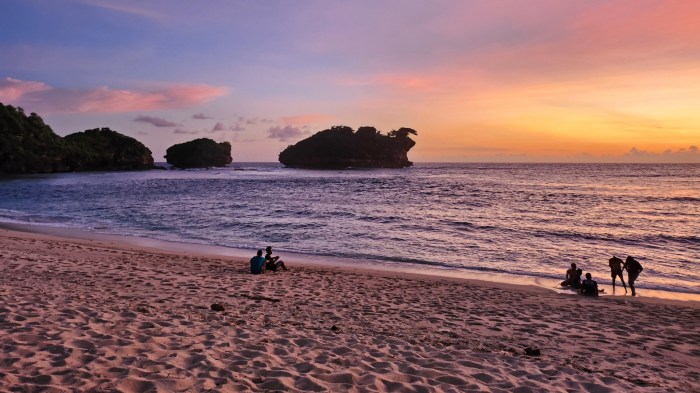
Armed with the knowledge and techniques Artikeld in this guide, you'll be ready to embark on your sunset photography adventure at Watu Karung. Embrace the golden hour, experiment with different framing techniques, and let the beauty of the location inspire your creativity. Remember to capture not just the vibrant colors but also the emotions and stories that unfold within each sunset. As you refine your skills and explore the possibilities, you'll find yourself capturing stunning sunset photos that truly capture the essence of Watu Karung's magic.